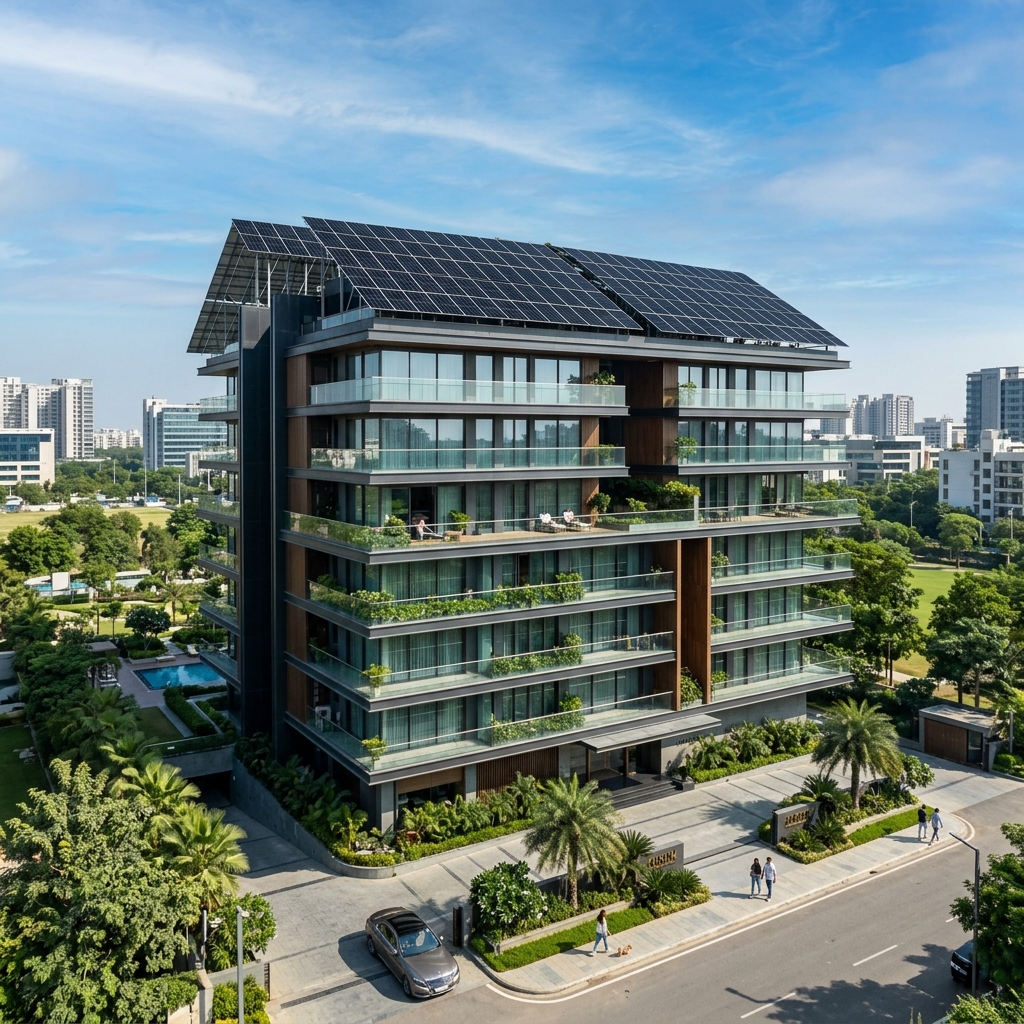
PM Surya Ghar Muft Bijli Yojana 2026: The Ultimate Rooftop Solar Scheme Manual for Indian Homeowners
The transition to renewable energy in India has reached unprecedented heights. With the launch of the ambitious PM Surya Ghar Muft Bijli Yojana by the Ministry of New and Renewable Energy (MNRE), the Central Government aims to power 1 Crore (10 million) households across India with rooftop solar panels. This landmark scheme offers up to ₹78,000 in direct central subsidies, making solar energy a financially lucrative and highly accessible investment for middle-class residential families.
However, planning a solar rooftop setup requires a clear understanding of sizing parameters, financial cash flows, state-specific rules, and the step-by-step subsidy claim process. This comprehensive manual breaks down everything you need to know to take your home green and slash your monthly utility electricity bills to zero.
1. Sizing Your Rooftop Solar System: Core Sizing Methodology
Sizing your system correctly is vital. An undersized system will fail to offset your bills completely, while an oversized system can result in unapproved DISCOM feasibility applications or redundant capital expense. The capacity of a solar PV array is measured in Kilowatts (kW).
In India, a standard 1 kW rooftop solar system generates approximately 4 units (kWh) of electricity per day. Over a month (30 days), this translates to 120 units, and over a year, roughly 1,400 to 1,500 units depending on regional sunlight conditions (Peak Sun Hours).
Required System Capacity (kW) = Average Monthly Electricity Consumption (Units) ÷ 120
For example, if your household consumed 360 units in a recent billing cycle, the sizing equation is: 360 ÷ 120 = 3 kW. If you reside in a high-temperature zone with multiple air conditioners and consume 600 units, you will require a 5 kW system. Use this core ratio as a starting benchmark for all residential layouts.
2. The Central Government Subsidy (CFA) Structure
Under the PM Surya Ghar scheme guidelines, the central financial assistance (CFA) is structured directly to favor smaller residential setups, making them incredibly affordable:
| System Size (kW) |
Subsidy Per kW |
Total Central Subsidy (CFA) |
| 1 kW Array |
₹30,000 / kW |
₹30,000 |
| 2 kW Array |
₹30,000 / kW |
₹60,000 |
| 3 kW Array & Above |
₹18,000 for the 3rd kW |
₹78,000 (Capped) |
Important Note: Subsidies are only available for residential consumers. Commercial, industrial, and institutional entities are not eligible for direct CFA, but they can leverage accelerated depreciation (AD) benefits under income tax rules to recover investment costs.
3. State Government Top-Up Subsidies (Extra Savings Slabs)
To double the solar momentum, several progressive state governments in India offer additional cash top-ups over and above the central ₹78,000 subsidy:
- Uttar Pradesh (UP): Provides an extra ₹15,000 per kW, capped at ₹30,000 per residential system. A 3 kW setup in Noida or Lucknow receives a total subsidy of ₹78,000 (Central) + ₹30,000 (State) = ₹1,08,000! Homeowners can explore local verified installers in UP cities like Lucknow, Raebareli, Sultanpur, Amethi, Gauriganj, Musafirkhana, and Pratapgarh on our dedicated UP Solar Suppliers Hub.
- Delhi: Delhi Solar Policy offers a Generation Based Incentive (GBI) of ₹3 per unit of solar power generated, credited directly to your bank account monthly, offsetting any residual grid usage.
- Gujarat: The state provides swift clearance portals and fast net-metering setups, leading the nation in rooftop installations.
4. Step-by-Step Subsidy Application Process
Claiming your subsidy requires following a mandatory, structured process on the national portal:
- Registration: Visit pmsuryaghar.gov.in. Select your State, DISCOM name (e.g. UPPCL, Tata Power, MSEDCL), and input your electricity Consumer Number.
- Feasibility Approval: Apply for Technical Feasibility. Your local DISCOM engineer will evaluate if the transformer load can support your system capacity.
- Empanelled Vendor Selection: Once feasibility is approved, you must choose a registered, empanelled contractor. Non-registered vendors cannot trigger the subsidy.
- DCR Verification: Ensure modules used are **DCR (Domestic Content Requirement)** compliant. Imported panels do not qualify for any subsidies.
- Net-Metering Installation: The vendor will install the panels, structures, inverter, and apply for net metering. The DISCOM will fit a bidirectional net meter.
- CFA Clearance: Upload the commissioning certificate and bank check photo. The CFA subsidy will be credited directly to your bank account within 30 days!
5. Grid Sync Configurations: On-Grid vs Hybrid Systems
Indian residential consumers primarily choose between two technical configurations:
- On-Grid Solar (Grid-Tied): The system feeds excess daytime energy back into the state electricity grid via net metering. At night, you pull energy from the grid. Bills are calculated based on the net difference. This has the lowest setup cost and highest ROI.
- Hybrid Solar: Combines grid-tied connectivity with a battery backup bank. During a power outage, the system detaches from the grid and continues to power your home appliances from batteries. This is ideal for regions facing frequent power cuts.
6. Key Metrics Provided by our Solar Panels Calculator
Our advanced solar panels calculator is engineered to provide precise, data-driven estimates for your rooftop project. Here are the core metrics computed instantly by the tool:
- System Size Recommendation (kW): Computes the exact capacity you need based on your monthly power consumption slabs to maximize net-metering efficiency.
- Total Required Area (Sq. Ft.): Estimates the physical space needed on your roof to place panels of different configurations (flooded Monocrystalline vs Polycrystalline).
- Subsidies Calculations: Instantly factors in the central PM Surya Ghar scheme CFA rates (up to ₹78,000) and any local state top-ups (like Uttar Pradesh's extra ₹30,000) to find your net out-of-pocket setup cost.
- ROI and Payback Years: Outlines the precise timeline (typically 2.5 to 3.5 years) in which your solar panel investment will pay for itself through monthly electricity bill offsets.
- Cumulative 25-Year Savings: Calculates the massive long-term wealth generated by your green energy setup over its guaranteed lifetime of 25 years.
Frequently Asked Questions
Q. What is the rooftop area required for a 3kW solar system?
A standard 3kW system requires about 250 to 300 square feet of shadow-free rooftop space. High-efficiency monocrystalline panels require less physical area compared to older polycrystalline modules.
Q. Do solar panels require frequent maintenance?
No, solar panels have no moving parts and require minimal maintenance. Cleaning the panel surface once every two weeks with water to remove dust, bird droppings, and leaves is sufficient to maintain peak generation efficiency.
Q. What is the typical payback period for rooftop solar?
For residential systems utilizing government subsidies, the typical payback period ranges from 3 to 4 years. After this initial payback period, the electricity generated by the solar panels is 100% free for the remaining 20+ years of panel life.
Q. Can I use solar panels to run air conditioners?
Yes, an on-grid solar system will offset the units consumed by your AC units. If you want to run ACs during power outages on an off-grid/hybrid system, you will require a heavy-duty inverter (typically 5kVA or larger) to manage starting surge loads.
Q. How long is the warranty on rooftop solar systems?
Standard Tier-1 panels come with a 25-year linear performance warranty. Inverters typically have a 5 to 10 year manufacturer warranty, and structure components have a 10-year durability warranty.