☀️ PM Surya Ghar Yojana 2026: Up to ₹78,000 Central Subsidy is Now Available!

Home › Efficiency Calculator

Solar Panel Efficiency Calculator

Measure panel cell conversion ratings and calculate actual operational power outputs.

🔬 Module Parameters

Standard Test Condition (STC) is 25°C. Rooftops reach 45°C–60°C.
🔬

Evaluate Real Cell Performance

Provide your module dimensions and operating temperatures on the left to reveal actual efficiency percentages and real wattages.
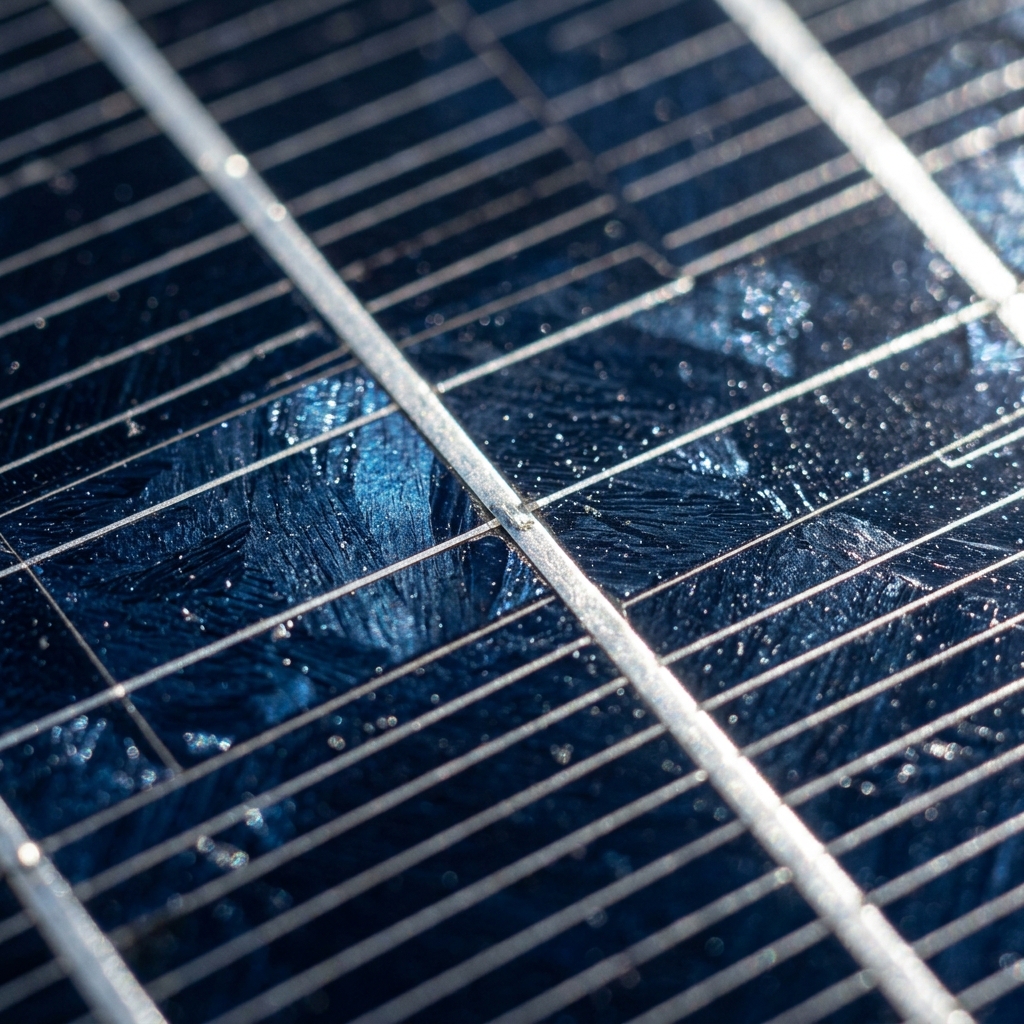
Solar Panel Efficiency Sizing Guide: Cell Technologies & Degradation

Solar panel module cell real world efficiency and temperature derating

Solar panel efficiency measures the percentage of sunlight hitting the solar cells that is converted into usable electricity. High-efficiency modules maximize power production per square meter, making them ideal for rooftops with limited space.

1. Calculating Solar Panel Efficiency

Solar module efficiency is determined under Standard Test Conditions (STC: 1000W/m² solar irradiance, 25°C cell temperature, and 1.5 Air Mass spectrum). The efficiency percentage calculation formula is:

Efficiency (%) = [Maximum Power (Watts) ÷ (Module Length m × Module Width m × 1000)] × 100

For instance, a standard monocrystalline solar panel rated at 540Wp measuring 2.279m long by 1.134m wide has an efficiency of: [540 ÷ (2.279 × 1.134 × 1000)] × 100 = 20.89%.

2. Cell Technologies: Monocrystalline, Mono PERC, and Bifacial

3. Understanding Panel Power Output Degradation

Over time, all solar panels degrade due to exposure to UV radiation and moisture (LID - Light Induced Degradation). Tier-1 monocrystalline modules degrade by roughly 1.5% in the first year, followed by an average annual degradation rate of 0.5% per year, retaining over 80% of their initial capacity after 25 years.

Frequently Asked Questions

What is the temperature coefficient in solar panels?
As solar cells get hotter during the day, their efficiency drops. The temperature coefficient (typically -0.35% per °C) indicates the power loss for every degree the cell temperature rises above 25°C. High-efficiency modules have lower coefficients, performing better in hot summer climates.
What is the difference between STC and NOCT ratings?
STC (Standard Test Conditions) operates at a simulated 25°C panel temperature. NOCT (Nominal Operating Cell Temperature) uses a more realistic 45°C panel temperature under 800W/m² sunlight and 20°C air temperature, providing a closer estimate of real-world field efficiency.
How fast do solar panels degrade over time?
Modern tier-1 solar panels degrade by about 1.5% to 2.0% in the first year, followed by an average annual degradation rate of 0.5% per year, retaining over 80% of their initial power capacity even after 25 years.