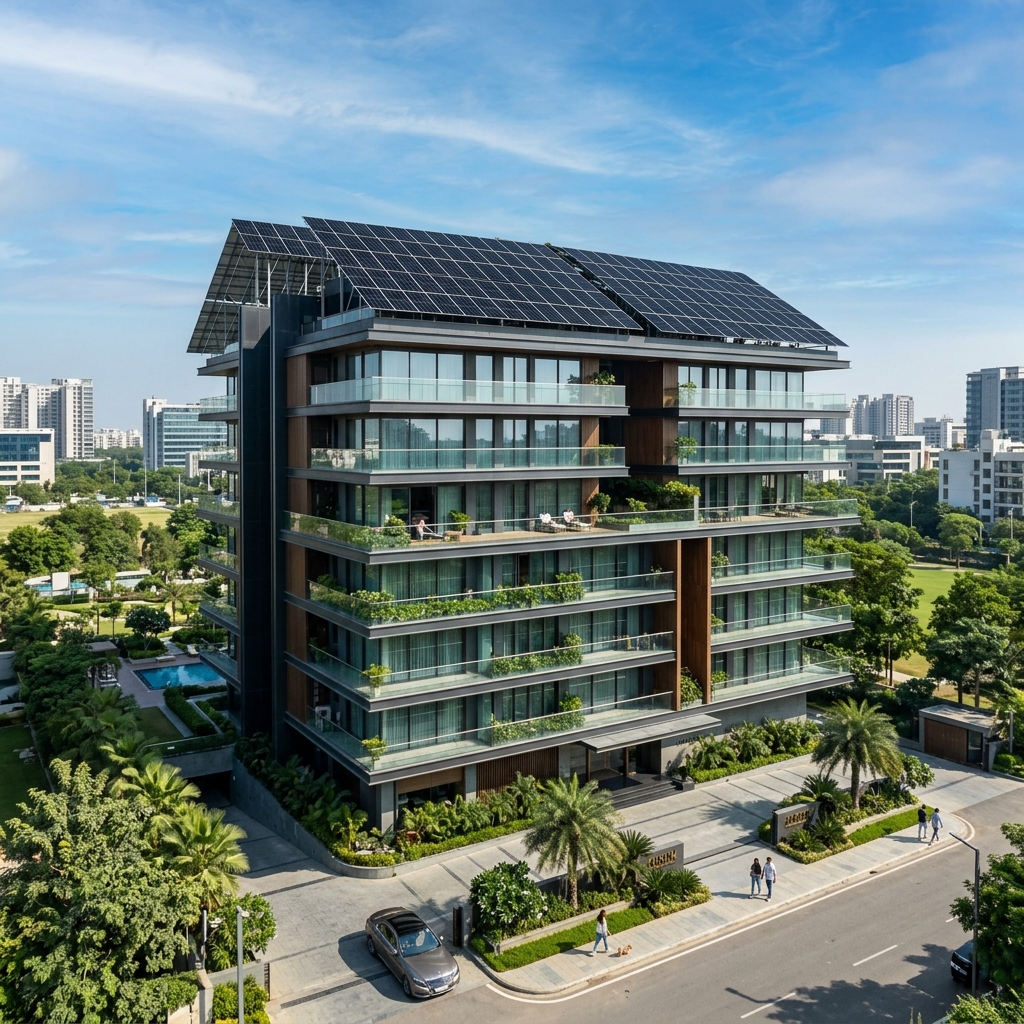
Going Solar in Lucknow: Sizing, Costs & Subsidies
Lucknow, the capital of Uttar Pradesh, is leading the state's transition to solar energy. With high urban residential electricity tariffs under MVVNL (averaging ₹7 to ₹9 per unit), installing rooftop solar panels offers an incredible investment opportunity. A typical household in areas like Gomti Nagar, Aliganj, or Hazratganj can offset up to 90% of their electricity bills by utilizing grid-tied solar systems.
UPNEDA & Central Subsidy Slabs in Lucknow
Under the PM Surya Ghar Muft Bijli Yojana, residential installations in Lucknow get double subsidy benefits:
- Central CFA Subsidy: ₹30,000 per kW for 1 kW and 2 kW systems, and a maximum cap of ₹78,000 for 3 kW and above.
- UP State Government Subsidy: An additional ₹15,000 per kW, capped at a maximum of ₹30,000 per system.
This means a standard 3 kW system receives a total subsidy of ₹1,08,000, bringing the net capital investment down to under ₹75,000. The payback period for Lucknow residential solar is typically **under 2.2 years**!
Local MVVNL Net Metering Approvals
The local power distribution is handled by Madhyanchal Vidyut Vitran Nigam Limited (MVVNL). The registration for net metering is done entirely through the UPNEDA online portal. An empanelled contractor will handle the site feasibility study, safety check, and meter installation. Bidirectional meters record excess units exported during the day and credit them to your billing account, ensuring massive monthly savings.
Why Install Rooftop Solar Panels in Lucknow?
Rooftop solar installations in Lucknow provide a double financial benefit. First, they offset the monthly billing units at the highest slab rate under MVVNL (Madhyanchal Vidyut Vitran Nigam Limited). With residential billing tariffs reaching up to ₹7.50 to ₹9.00 per unit for high consumption, every unit generated by your panels directly saves you cash. Second, on-grid systems export excess solar energy during peak sunshine hours back to the local utility grid. This banked energy is adjusted against your night consumption, ensuring you get the maximum value out of your capital investment.
Step-by-Step UPNEDA Solar Subsidy Process in Lucknow
To secure your direct subsidy (up to ₹78,000 from the central government and ₹30,000 from the Uttar Pradesh state government), you must follow this official checklist:
- Portal Registration: Register on the PM Surya Ghar National Portal using your local MVVNL (Madhyanchal Vidyut Vitran Nigam Limited) consumer connection number.
- Feasibility Approval: Submit an online application for grid feasibility. The local DISCOM sub-station engineers in Lucknow will review and grant approvals based on transformer loading capacity.
- Select Approved Vendor: Hire a registered, UPNEDA empanelled vendor (like the verified dealers listed above) to execute the system design and structural mounting.
- DCR Module Verification: Ensure the installer uses only DCR (Domestic Content Requirement) certified solar cells and panels. Non-DCR panels are ineligible for subsidies.
- Net-Metering Installation: The vendor will submit the connection report. DISCOM engineers will inspect the rooftop wiring, mount the bidirectional net-meter, and issue a synchronization certificate.
- Subsidy Disbursement: Upload the system completion report, signed agreements, and solar invoice copy on the portal. The subsidy will be credited directly to your bank account within 30 days of approval.
Technical Sizing Benchmarks for Lucknow
Based on local environmental parameters and historical data, our solar sizers utilize these standard benchmarks for Lucknow:
| Parameter | Value / Benchmark | Impact on Sizing |
|---|---|---|
| Daily Peak Sun Hours | ~4.7 Hours / Day | Determines daily units generated (e.g. 3kW produces ~12-14 units daily) |
| Connected Grid Utility | MVVNL (Madhyanchal Vidyut Vitran Nigam Limited) | Net-metering credits banking policy and tariff rules |
| Rooftop Space Required | 80 - 100 sq. feet per kW | A 3kW solar system needs ~250-300 sq. ft of shadow-free area |
| Ideal Orientation | True South / 20° Tilt Angle | Maximizes solar irradiance capture during winter and summer solar angles |
| System Lifespan Warranty | 25 Years Panel Performance | Guarantees long-term ROI yields and zero-cost electricity for decades |