Off-Grid Solar Power Generator Sizing Guide
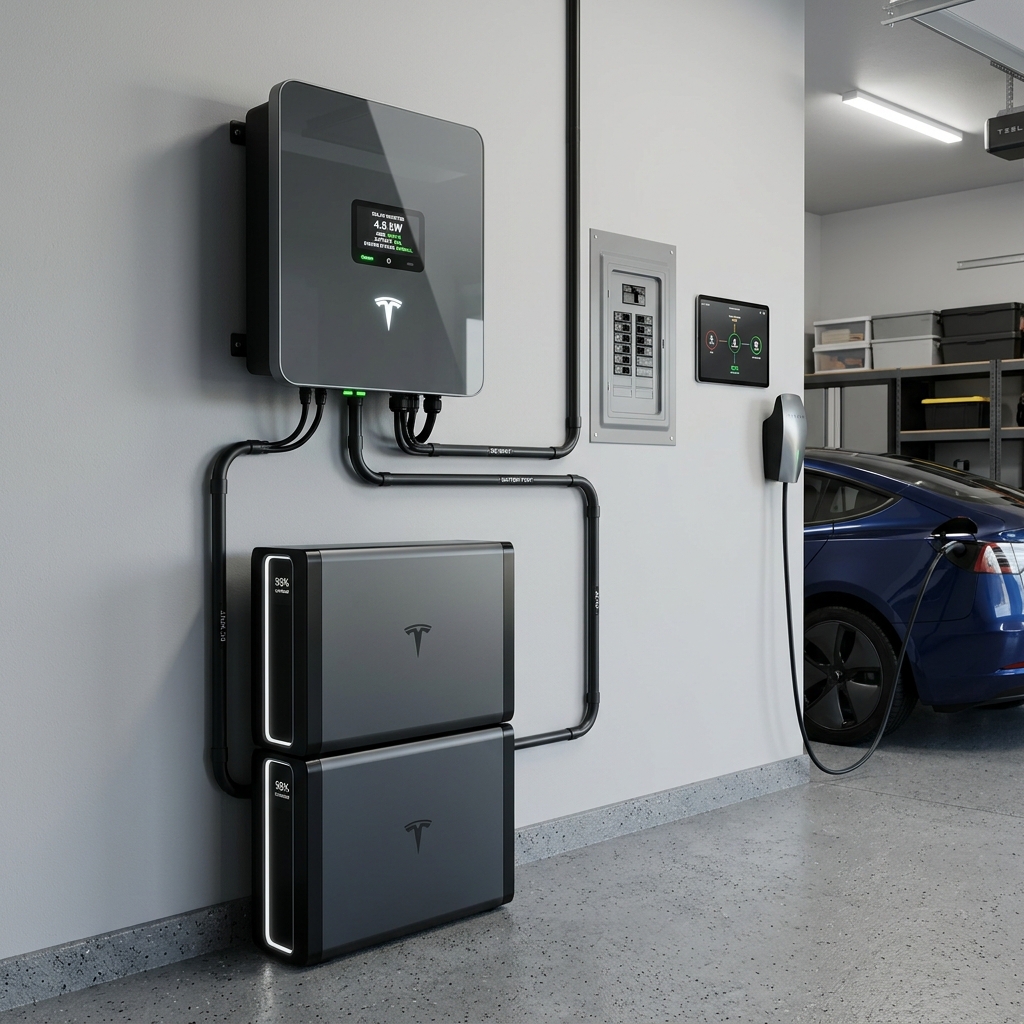
Solar power generators are highly convenient off-grid setups that combine solar panels, a charge controller, a battery bank, and an inverter. Sizing a solar generator kit correctly ensures you have reliable backup power during grid failures or while living off-grid.
⚠️ Policy & Subsidy Warning: Standalone residential off-grid solar generator kits (with batteries) are not eligible for government subsidies under the PM Surya Ghar Muft Bijli Yojana. Residential solar subsidies are strictly reserved for grid-connected (on-grid) systems. However, agricultural standalone off-grid solar pumps are eligible for up to 60% subsidies under Component-B of the PM-KUSUM scheme.
1. Calculating Energy Consumption (Wh)
Multiply the average running Watts of all connected appliances by their daily run time. E.g., running a 100W TV for 5 hours consumes **500 Watt-Hours (Wh)** of daily energy storage capacity.
2. Off-Grid Solar Generator Cost & Sizing Factors
Since off-grid systems rely on battery storage, their setup cost is typically 30% to 50% higher than equivalent on-grid systems. The key cost components include:
- Solar Panels: Capture sunlight and convert it into DC electricity. Average cost is ₹25,000 to ₹35,000 per kW.
- Battery Bank: Storage capacity (typically 12V or 24V Lead-Acid or Lithium-ion). Lithium batteries cost more upfront but last 3x longer.
- Charge Controller: MPPT (Maximum Power Point Tracking) controllers are highly recommended over PWM as they are 30% more efficient.
- Off-Grid Inverter: Converts DC battery power to AC household power. Needs to handle peak surge current for starting heavy motor loads.
Frequently Asked Questions
Yes, but it requires a very large solar panel array (typically 3kW+) and a substantial battery bank to support the high initial surge current and continuous load, which significantly increases the setup cost. Off-grid kits are best suited for lighting, fans, laptops, and refrigerators.
No, there are no government subsidies available for off-grid solar generators or rooftop battery storage systems for domestic residential homes. Subsidies are only applicable to grid-tied systems.
Solar panels last 25+ years, MPPT controllers and inverters last 5 to 10 years, and batteries need replacement every 3 to 5 years (for Lead-Acid) or 8 to 10 years (for Lithium-ion).